Ages Without Apps
Short · October 14, 2026
How Persians Made Ice in the Desert Without Electricity
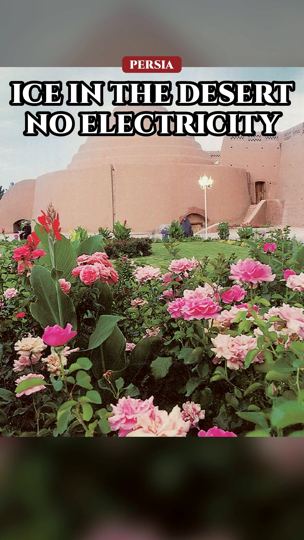
How Persians made ice in the desert without electricity: the yakhchal, or "ice pit". In the dry towns of the Iranian plateau, winter water from underground canals (qanats) was run into long, shallow pools.
Key facts about how persians made ice
- A tall mud brick wall on the south side, up to about 10 metres high, kept the sun and wind off them.
- On clear winter nights a thin layer froze; the next day workers poured another thin layer on top, and so on until the ice was about half a metre thick.
- They broke it into blocks and stored it in a deep pit under a thick mud brick dome, insulated with straw, so the town had ice through the hot summer.
A note on the evidence
- The real freezer was the sky: building physics modelling of a yakhchal in Yazd found that most of the cooling came from the pool losing heat by radiation to the clear night sky, helped by evaporation in the very dry winter air.
Sources for how persians made ice
- Encyclopaedia Iranica, "Yaḵčāl" (ice house): shallow basins, 5 to 10 cm layers built up to about 50 cm, qanat water, straw insulation
- Archnet, "Yakhchal": pools 30 to 50 cm deep, east to west shade wall up to 10 m on the south side against sun and wind, freezing on winter nights, ice kept for summer
- Max Fordham R+I, "The Physics of Freezing at the Iranian Yakhchal": radiation to the night sky as the dominant cooling, plus evaporation in dry air
Images: public domain and CC0 photos and drawings from Wikimedia Commons, each labelled on screen with its date (Flandin drawing 1840; Sevruguin photo before 1933; Mittelholzer aerial photo 1925; an ice making photo over 80 years old; a 2005 photo of the Moayedi ice house in Kerman). The diagrams are our own simplified drawings. Sound effects: CC0 water recording plus sounds we generated ourselves.
Questions people ask
What are the key facts: how persians made ice?
A tall mud brick wall on the south side, up to about 10 metres high, kept the sun and wind off them. On clear winter nights a thin layer froze; the next day workers poured another thin layer on top, and so on until the ice was about half a metre thick. They broke it into blocks and stored it in a deep pit under a thick mud brick dome, insulated with straw, so the town had ice through the hot summer.
Is any of this disputed or uncertain?
The real freezer was the sky: building physics modelling of a yakhchal in Yazd found that most of the cooling came from the pool losing heat by radiation to the clear night sky, helped by evaporation in the very dry winter air.
Where can I check the sources?
This page lists 3 sources, including: Encyclopaedia Iranica, "Yaḵčāl"; Archnet, "Yakhchal": pools 30 to 50 cm deep, east to west shade wall up to 10 m on the south side against sun and wind, freezing on winter nights, ice kept for summer; Max Fordham R+I, "The Physics of Freezing at the Iranian Yakhchal": radiation to the night sky as the dominant cooling, plus evaporation in dry air.
Where can I watch the video?
The Short is on the Ages Without Apps YouTube channel, and you can watch it on this page.
Enjoyed this story?
Subscribe for the next one.