Ages Without Apps
Short · October 15, 2026
Ancient Rome Apartments: Life Without Elevators or Plumbing
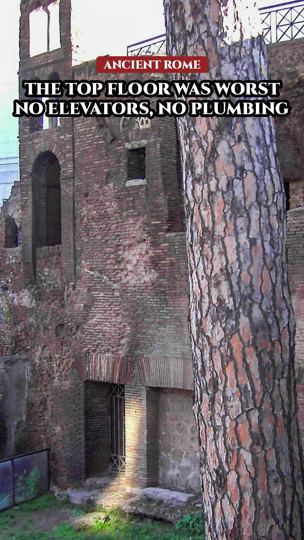
Ancient Rome apartments: what life was like without elevators or plumbing. Most Romans in the city rented rooms in tall apartment blocks called insulae, and the top floor, today's penthouse, was the worst place to live.
Key facts about ancient rome apartments
- Shops filled the ground floor and richer tenants took the big flats just above them.
- Higher up, rooms got smaller and cheaper.
- No water came up the stairs: you carried every bucket from a street fountain, and there was no toilet, so slop pails went out of the window.
- Wooden floors and cooking fires made blazes spread fast, and cheaply built blocks collapsed, which is why Emperor Augustus capped new buildings on public streets below seventy Roman feet, about twenty metres.
Sources for ancient rome apartments
- Strabo, Geography 5.3.7 (Loeb, trans. H. L. Jones): Augustus limited building heights on public streets to under seventy feet, against fires and collapses
- Juvenal, Satire 3 (trans. G. G. Ramsay, 1918): collapsing blocks, fires, the tenant "under the tiles, where the gentle doves lay their eggs" who is the last to burn, and vessels and slop pails thrown from windows
- J. E. Packer, "The Insulae of Imperial Ostia", Memoirs of the American Academy in Rome 31 (1971), and the Ostia Antica site resources (ground floor shops, larger flats below, smaller rooms above, stairs from the street)
Images: public domain and CC0 photos and artworks from Wikimedia Commons, each labelled on screen with its date (the Insula dell'Ara Coeli in Rome, 2nd century AD; Ostia; Pompeii; Augustus of Prima Porta; the Doves mosaic; Hubert Robert's 1785 painting of a fire in Rome, a later work). The insula diagrams are our own simplified drawings. Sound effects: public domain and CC0 recordings plus a collapse sound we generated ourselves.
Questions people ask
What are the key facts about ancient rome apartments?
Shops filled the ground floor and richer tenants took the big flats just above them. Higher up, rooms got smaller and cheaper. No water came up the stairs: you carried every bucket from a street fountain, and there was no toilet, so slop pails went out of the window. Wooden floors and cooking fires made blazes spread fast, and cheaply built blocks collapsed, which is why Emperor Augustus capped new buildings on public streets below seventy Roman feet, about twenty metres.
Where can I check the sources?
This page lists 3 sources, including: Strabo, Geography 5.3.7; Juvenal, Satire 3; J. E. Packer, "The Insulae of Imperial Ostia", Memoirs of the American Academy in Rome 31.
Where can I watch the video?
The Short is on the Ages Without Apps YouTube channel, and you can watch it on this page.
Enjoyed this story?
Subscribe for the next one.